> For the complete documentation index, see [llms.txt](https://docs.pay.io/llms.txt). Markdown versions of documentation pages are available by appending `.md` to page URLs; this page is available as [Markdown](https://docs.pay.io/getting-started/onboarding-process.md).
# Onboarding Process
Once your account has been successfully created, you will need to log in to [Pay.io](https://console.pay.io) to complete a short onboarding and configure your merchant environment.
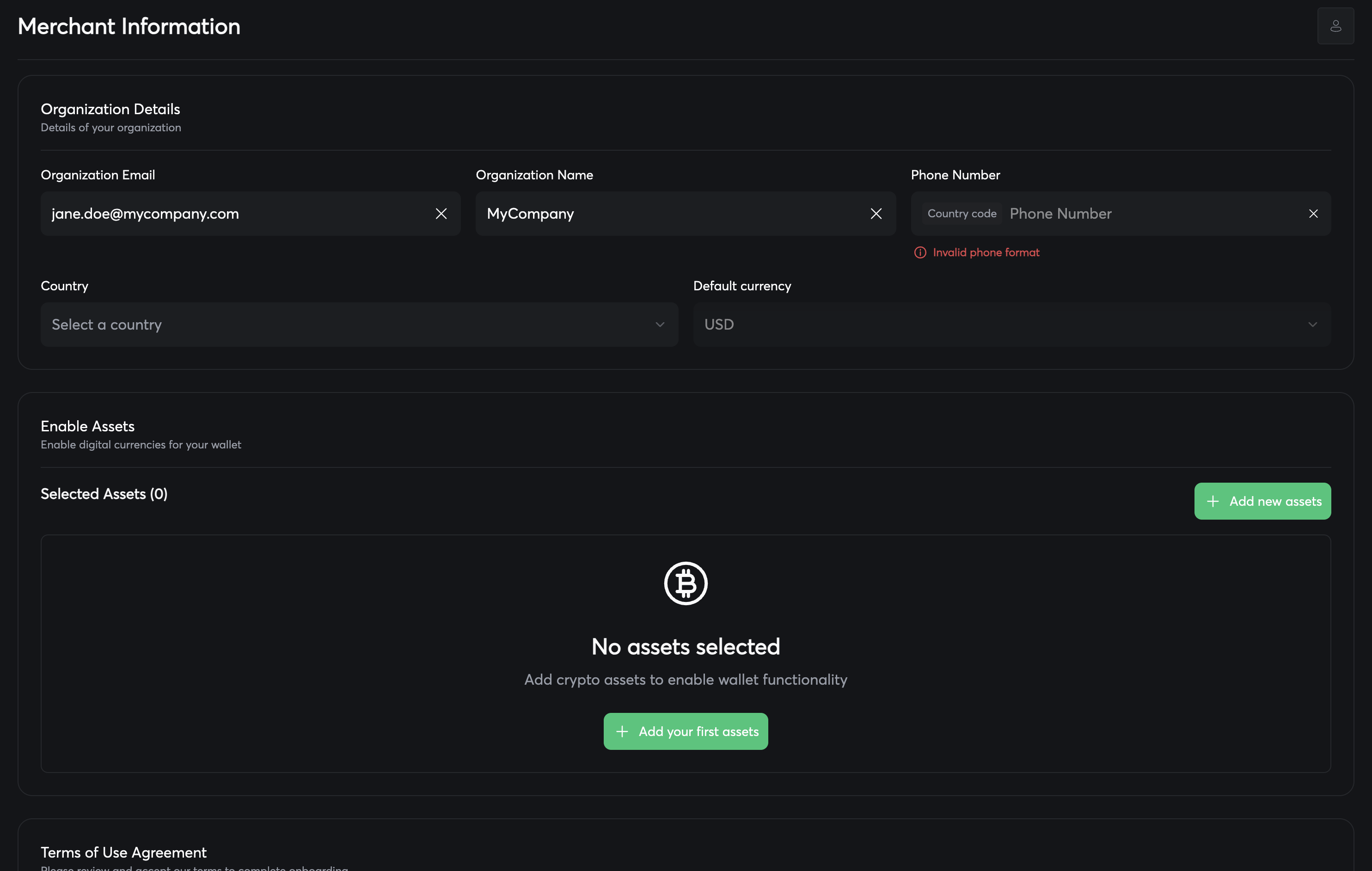
This process ensures your organisation details are correct and allows you to select the **assets** you wish to transact with. This will be done in the **Onboarding >** **Merchant Information** section of Pay.io platform after you've logged in for the first time.
### Setting up Merchant Information
{% stepper %}
{% step %}
#### Organisation Details
To set up the Merchant Information, you'll need to submit your:
* Organisation Email
* Organisation Name
* Phone Number
* Country
* Default Currency (Fiat)
{% endstep %}
{% step %}
#### Enabling Assets
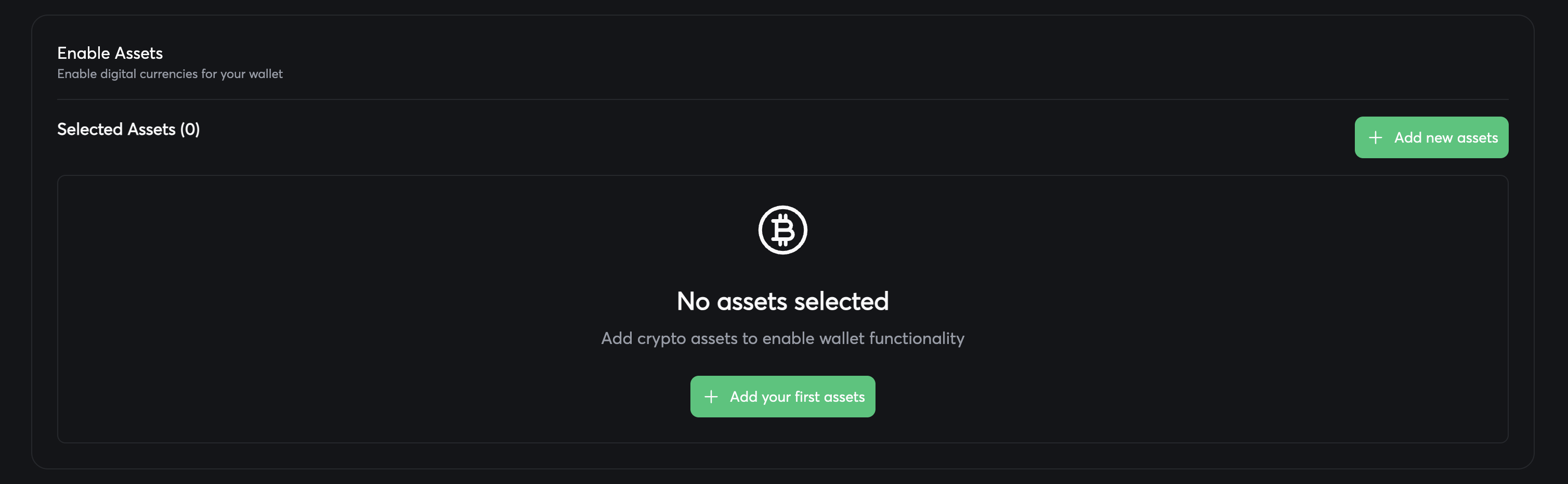
Next up, you'll have to choose which Assets your Merchant Console's Hot Wallet will support.
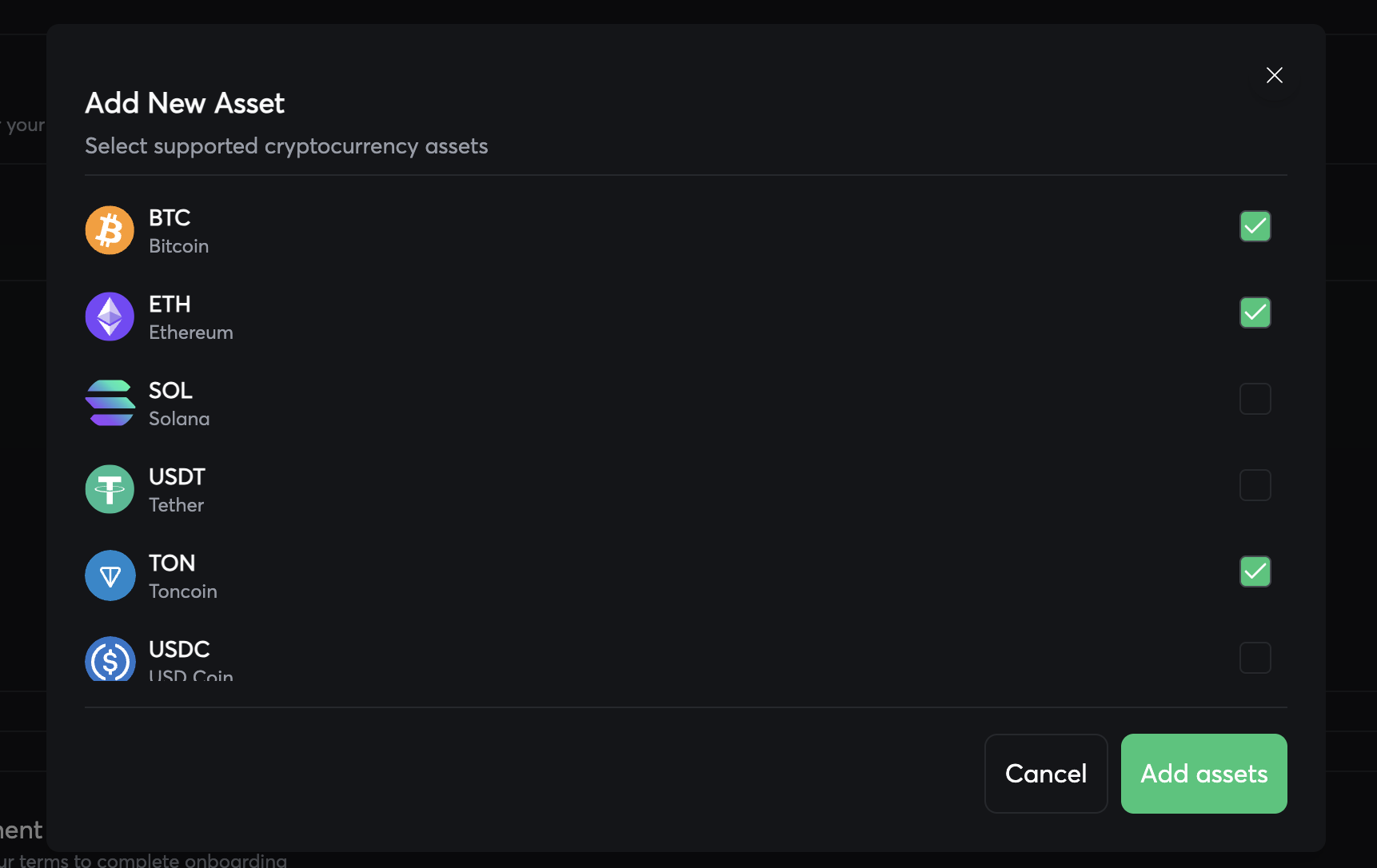
Assets refer to the specific cryptocurrencies and stablecoins that your merchant account is configured to transact with. Pay.io currently supports the following networks and tokens:
* Bitcoin (BTC)
* Ethereum (ETH)
* Solana (SOL)
* Tether (USDT)
* USD Coin (USDC)
* TON (TON)
* TRON (TRX)
{% hint style="info" %}
See full list of available assets with supported networks in [List of Available Assets](/assets/asset-management-add-edit-disable/list-of-available-assets.md).
{% endhint %}
1. To add new assets, click on the **“+ Add your first assets” button** and from the pop-over select the correct cryptocurrency and/or stablecoin by ticking the checkboxes. Then click **“Add assets”.**
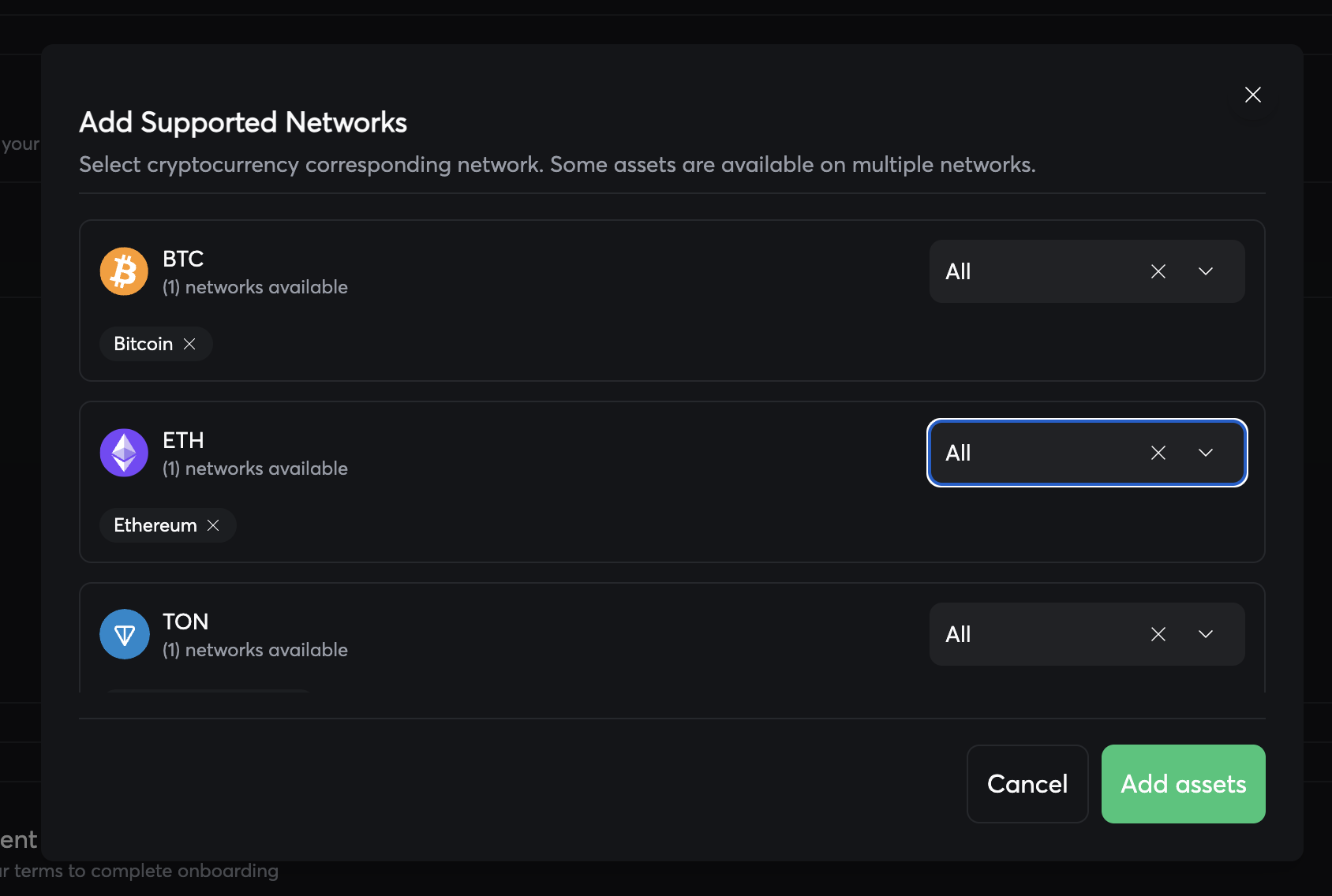
2. For each selected asset, you can **specify** a **corresponding** **network**. As some assets are available in **multiple** networks, **“All” option** is also available.
3. Once the networks are assigned, click **“Add assets”** once again. The assets are now **configured**. You'll be able to update and add further assets after the onboarding steps are completed.
{% endstep %}
{% step %}
#### Terms of Use Agreement
To finalise the setup, please review the legal agreements that govern the use of the Pay.io platform. You'll need to read and agree to:
* [Terms and Conditions ](https://www.pay.io/terms-of-use)
* [Privacy Policy](https://www.pay.io/privacy-policy)
{% endstep %}
{% endstepper %}
---
# Agent Instructions
This documentation is published with GitBook. GitBook is the documentation platform designed so that both humans and AI agents can read, navigate, and reason over technical content effectively. Learn more at gitbook.com.
## Querying This Documentation
If you need additional information that is not directly available in this page, you can query the documentation dynamically by asking a question.
Perform an HTTP GET request on the current page URL with the `ask` query parameter, and the optional `goal` query parameter:
```
GET https://docs.pay.io/getting-started/onboarding-process.md?ask=&goal=
```
`ask` is the immediate question: it should be specific, self-contained, and written in natural language.
`goal` is optional and describes the broader end goal you are ultimately trying to accomplish on behalf of the user. GitBook uses it to tailor the answer towards what is most useful for that goal.
The response will contain a direct answer to the question and relevant excerpts and sources from the documentation.
Use this mechanism when the answer is not explicitly present in the current page, you need clarification or additional context, or you want to retrieve related documentation sections.